50/30/20 Savings Rule Calculator

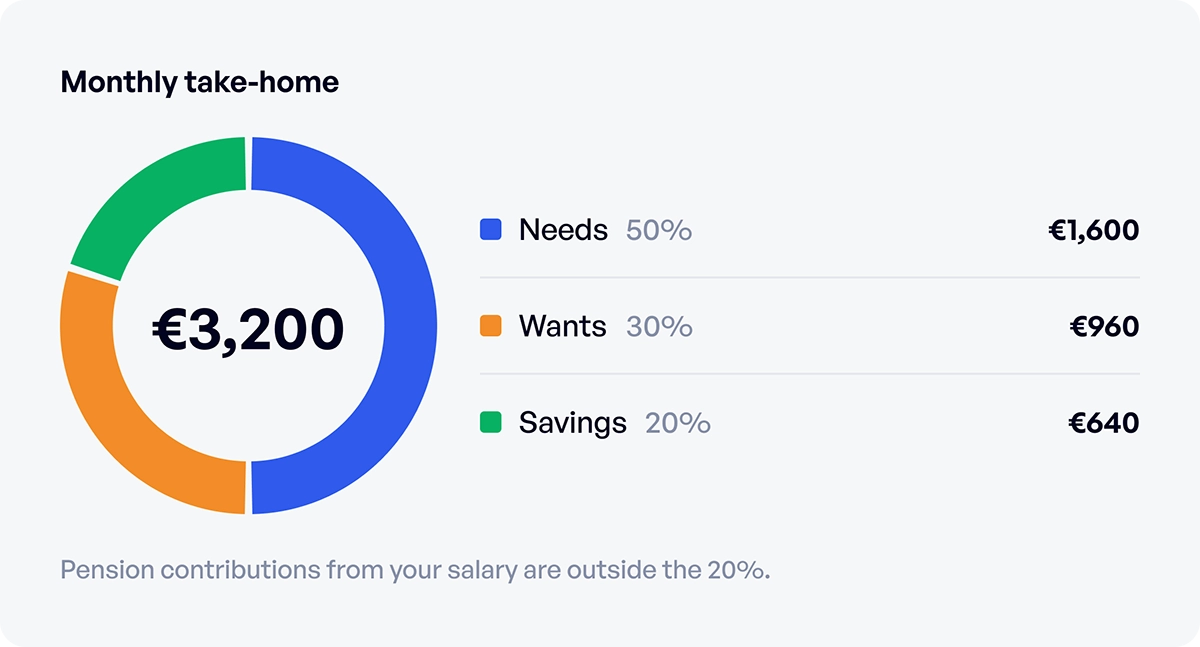
Figuring out how much money to put aside on a regular basis can be tough. Our 50/30/20 savings rule calculator helps you plan your monthly spending while making room for savings. Using your take-home pay, it suggests an amount for needs, wants, and savings, which you can then adjust around your household costs and the goals you’re saving towards.

Make your €640 a month earn more

Compare interest rates on savings accounts in Ireland and find a home for the cash part of your savings.

How the 50/30/20 rule works

The rule splits your take-home pay into three simple buckets, so you can budget without tracking every euro.

  • Needs: rent or mortgage, food, bills, essential transport, minimum repayments
  • Wants: meals out, streaming, hobbies, holidays
  • Savings: cash savings, pension top-ups, investments
Adjust the split to fit your life

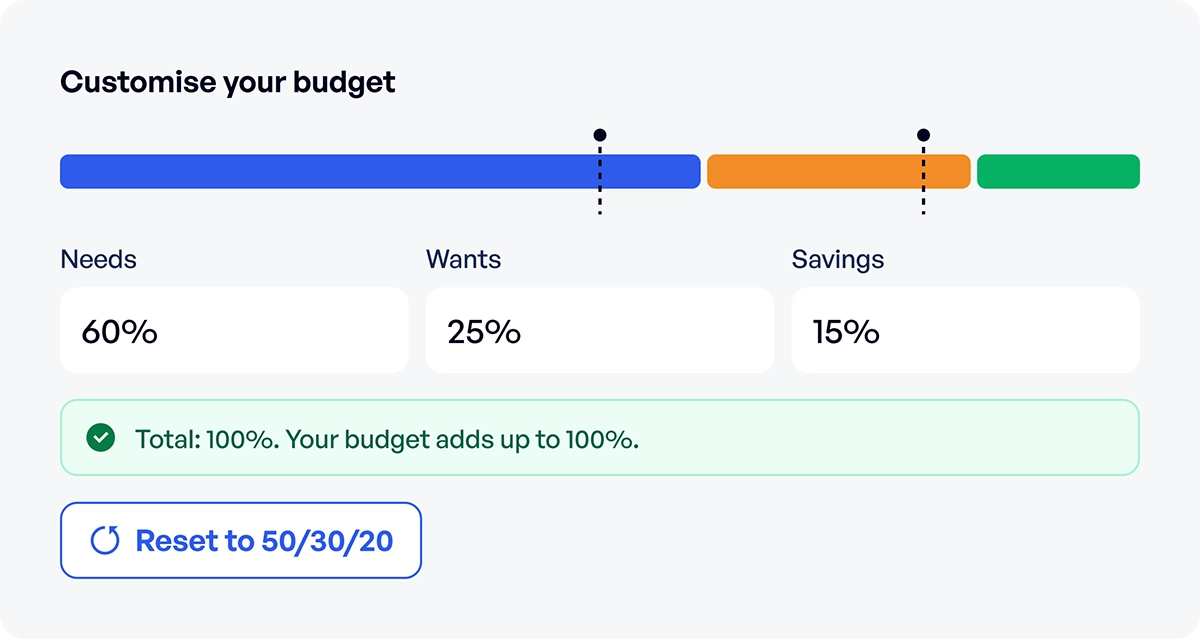
If rent or childcare takes more than half your pay, give needs a bigger share and take it from wants or savings until there’s room again.

  • Customise your budget changes each percentage. They must add up to 100%.
  • Reset to 50/30/20 restores the default.
  • Annual Bill Converter spreads yearly costs like insurance across your monthly needs.

Frequently Asked Questions

Our calculator uses your income after tax and other payroll deductions, also known as take-home pay. Entering the amount paid into your bank account each month will give you the most accurate read. Using your salary before deductions would give you a budget higher than the amount you have available to spend and save.

Yes. A joint budget uses your combined monthly take-home income and includes both partners’ expenses. Personal budgets use each person’s own income and share of household costs.

Yes. Enter the lower end of the take-home pay you can usually expect to come in, leaving out variable earnings such as overtime or commission. A budget based on your smallest expected income is easier to maintain during quieter months. Extra income can be set aside to cover months when earnings fall or added to your savings goals.

No. The calculator shows how much of your monthly income is allocated to savings, without adding interest or projecting a future balance. Any interest earned would be separate from the amount you put aside.

To see what your savings could be earning, use our savings account comparison tool.

Yes. Money invested from your take-home pay counts towards the savings portion of the rule. Keeping a small cash emergency fund in an accessible savings account can help avoid having to sell investments to cover an unexpected bill.

Unsure where to get started on your investing journey? Check out our guide for beginners.

Savings

Find the right home for your savings

Once you know how much you can save each month, our savings guides and tools help you choose where to keep it.

Browse all savings guides >