
Explaining Kids’ Savings Accounts Simply
Childrens Savings Accounts
Children’s savings accounts are a way for parents to save money for their child’s future and teach positive money habits from a young age.
Reading time: 6 min
Last updated: March 31, 2026

Table of Contents:

Written by:
Dan Malone
What is a Children's Savings Account
A children’s savings account is similar to a normal savings account, but for kids. These accounts can be offered as instant access, fixed term or notice accounts. Children’s instant access savings accounts are the most common.
How Children's Savings Accounts Work in Ireland
Children’s savings accounts are typically set up in one of three different ways:
- 1
Adult-Led: The account is opened in your name, but your child’s name is also listed on the account. That way, you’re in full control, on their behalf.
- 2
Jointly Owned: You and your child open the account together and you’re both listed as account holders. Either of you can manage and access the account.
- 3
Child-Led: You open the account, but your child is listed as the sole account holder. They’re in full control and can manage and access the account as they wish.
Online Banking: children’s accounts are commonly set up as a sub-account of the adult’s personal account. That way, parents can keep track of how money is being spent, control how debit cards are being used and limit any transfers in or out of the account.
Key Rules and Transitions
Age: Many banks will offer both a children’s savings account (for under 12s) and a teens savings account (for 12-17 year olds). The accounts that will be available to you will depend on what age your child is at the time.
Age 18 Transition: When the child turns 18, their children's savings account will automatically convert to an adult account.
Parental Control: You must be the parent or legal guardian of the child to set up a children’s savings account.
Other savings providers may offer a Child Benefit savings product, designed for regularly saving your Child Benefit payments for your child’s future.
How to Choose the Best Children's Savings Account
When choosing an account, there are three main factors to take into consideration:
The AER is the interest rate that shows you how much your child’s savings will grow. The higher the AER, the more interest they’ll earn.
Not all children’s savings accounts are available to all minors. Availability will vary based on the child’s age and the bank’s rules. For example:
- “Children’s Account only available to kids and teens aged 6-17”.
- “Junior Account only available to kids aged 7-11”.
- “Student Account only available to teens aged 12-17”.
Other accounts will require the account to be set up in a particular way depending on the child’s age. For example:
- “For children under 7, an adult-led children’s account is required”.
- “For children over 7, adult-led, joint ownership or child-led children’s accounts can be used”.
Note: To open an account, the adult must be over 18, and the child associated with the account must be under 18.
You won’t always earn the advertised AER without limit. It’s common for accounts to use tiered interest rates or have a low maximum savings limit that’s eligible to earn the high interest rate. For example:
- “3.02% AER up to €1,000, but 0.25% on any excess”
- “1% AER up to €19,999.99, but if you exceed that limit a 0.01% AER will apply”
- “2% AER up to €5,000, but you can’t deposit more than that”
What Are The Benefits of a Children's Savings Account?
Children’s savings accounts show kids the difference between spending and saving early on. This can promote healthier money habits as your kids get older.
The sooner you start a savings account, the more you’ll benefit from compound interest. Compound interest is the secret ingredient to growing your money over time.
What Are The Drawbacks of a Children’s Savings Account?
If the goal is to build up a substantial sum over 18 years, children's savings accounts are often not the best option. You could find better returns with:
- Depositing a lump sum in a fixed rate account with a long fixed-term, like 7 or 10 years, to benefit from a higher, guaranteed rate of interest.
- Better yet, you could open an investment account and start investing long-term.
Once your child reaches age 18, the account will become theirs. They’ll be able to spend what was saved if they want to. If you want to maintain control over the savings you built, an account in your name might be the better option.
Over time, rising prices of goods and services will reduce the real value of a children’s savings account. It’s unlikely that your child will earn a return, after taxes, to keep their money safe from inflation.
Children's Savings Account Providers in Ireland (2026)
The main notice account providers in Ireland are PTSB, AIB, Bank of Ireland, Bunq, Revolut, Credit Unions and Ireland State Savings.
You can compare children’s savings account providers in Ireland by using our comparison tool.
Children's Savings Account vs Other Options
You don’t necessarily need a children’s savings account to save for your child’s future. These accounts are mainly useful if you’re trying to teach your child positive money habits or provide them with a level of independence over their funds.
If you want to save for your child for 18 years or more, a regular adult savings or investment account might be better. These accounts offer more options and better returns.
Tax Implications of Children's Savings Accounts
Yes, the money you save for your child is considered a gift for tax purposes. Irish tax law allows each parent to gift up to €3,000 to each child, every year, tax-free. This means you and your partner could save €6,000 per year for each child without triggering a tax liability.
If you gift more than this annual amount, the excess is set against your child’s ‘Group A threshold’ of €400,000. This is the lifetime limit of gifts and inheritances that your child can receive from a parent tax-free.
Capital Acquisitions Tax (CAT) is the Irish tax which applies to gifts and inheritances to your child. The current rate of CAT is 33%.
No, Revenue does not distinguish between types of accounts for tax purposes. It doesn’t matter if you save for your child using a children’s account or a normal savings account. What matters is that you clearly document what money is set aside for your child.
Yes, it’s crucial for maximising your tax-free savings. That way, you’ll make full use of the annual €3,000 small gift exemption. Include a note on any bank transfers you make for the benefit of your child for proof. Don’t mix this money with your own.
If you don’t clearly document this, Revenue could conclude that the full gift is being made at a single point in time in the future, which would be less optimal for tax.
Yes, the interest earned on children’s savings accounts is subject to DIRT at the current rate of 33%.
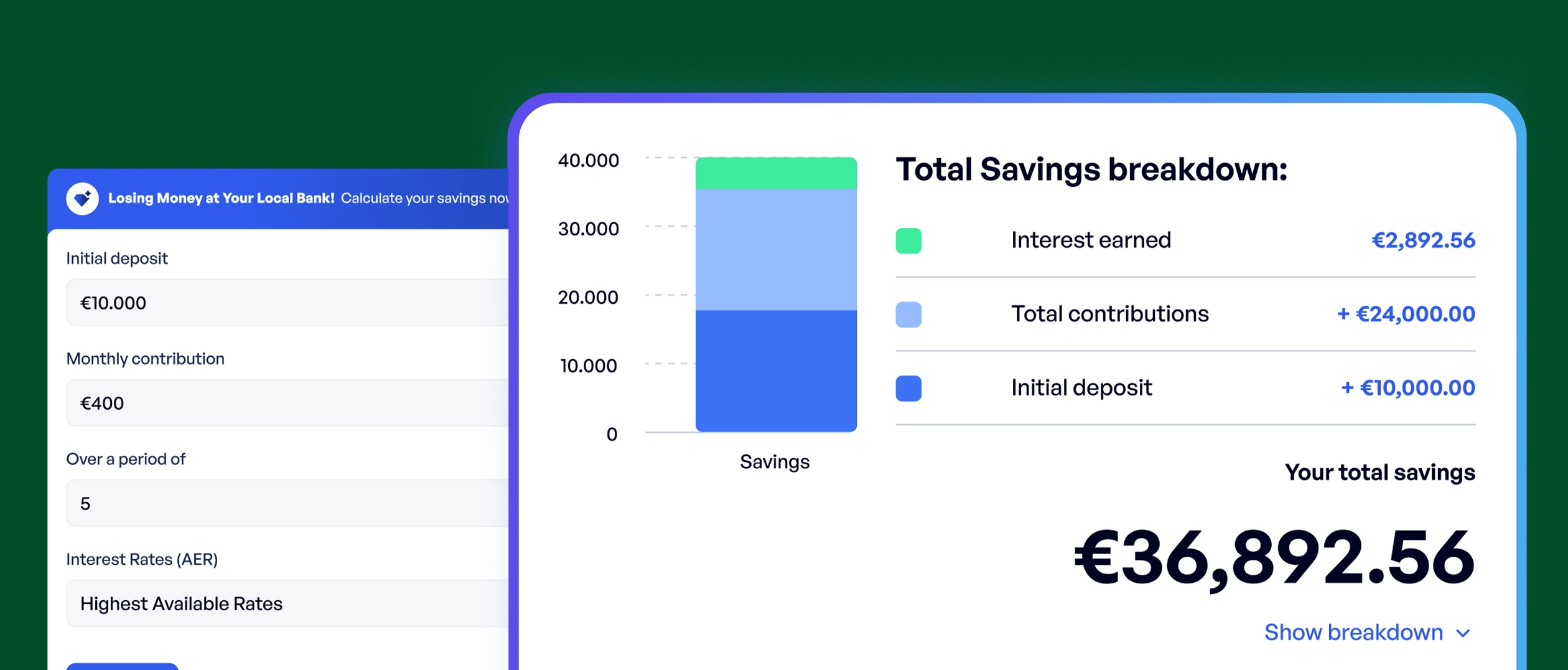
Savings Calculator
Calculate how much you can save over time, and get matched with the best accounts.
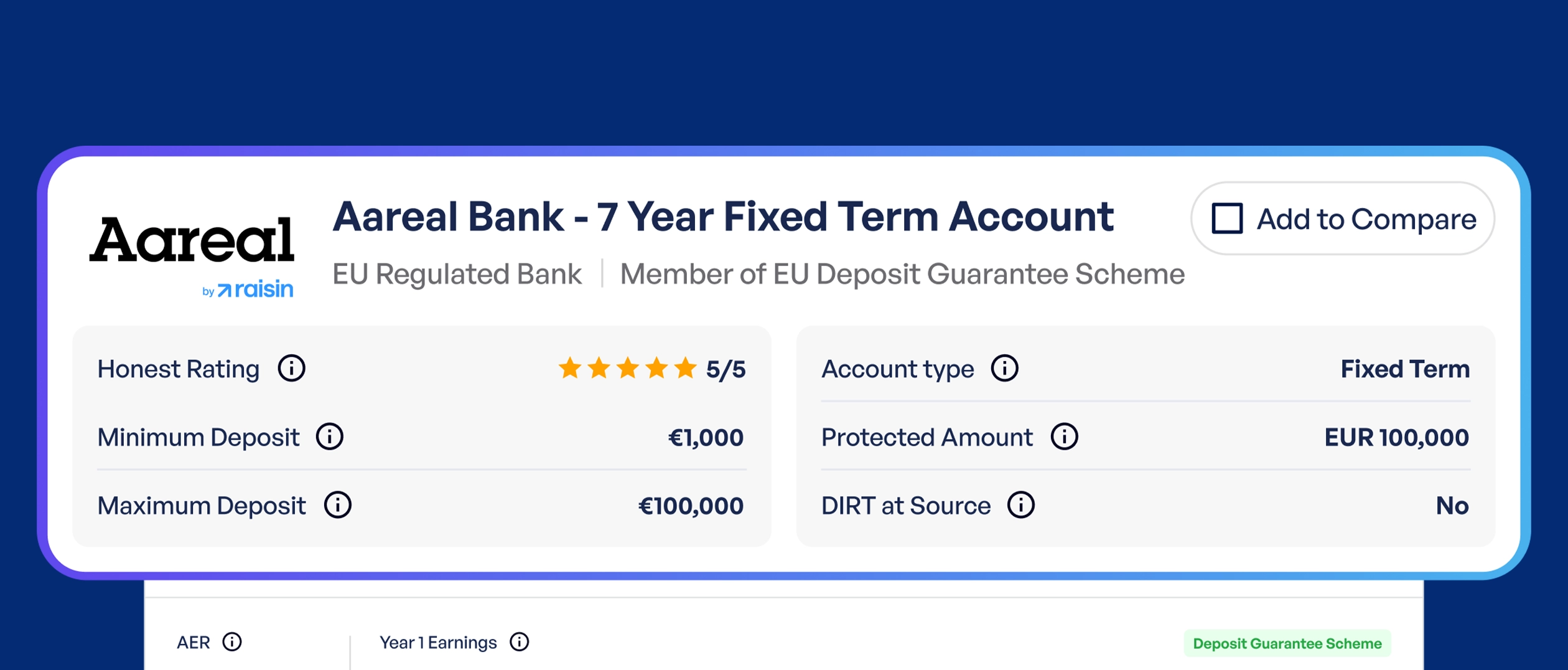
Savings Comparison Tool
Compare 265+ savings accounts side-by-side for detailed analysis.