Savings That Work on Your Schedule

Notice Savings Accounts

Notice savings accounts are a way to earn a return on money that you know you won’t need to access immediately.

Reading time: 6 min

Last updated: December 9, 2025

Written by:
Dan Malone

Share this article:

What is a Notice Savings Account

Notice savings accounts are the middle ground between instant access accounts and fixed term accounts. These accounts allow you to withdraw your money, but not right away. Instead, you need to give the bank ‘notice’ before making a withdrawal. How much notice you need to give will depend on the account, but it can be as little as 7 days.

How Notice Savings Accounts in Ireland Work

When you want to make a withdrawal from a notice account you need to inform the bank and then wait for an agreed number of days before you receive your money. This waiting time is called the ‘notice period’. Common notice periods in Ireland include:

  • 7 day notice savings account.

  • 21 day notice savings account.

  • 31 day notice savings account.

  • 40 day notice savings account.

Notice can be given online, by phone, or in your local branch. Most notice accounts will not allow you to withdraw any money until the notice period is fully served. In some cases, you may be able to withdraw before the period ends, but you’ll pay an early withdrawal charge if you do.

When the notice period ends, you’ll have a limited window of time to make your withdrawal. If you don’t withdraw before the window closes, you’ll need to serve the notice period again. For example:

  • With a 7 day notice account, after the 7 days have been served, you may have 7 days to make a withdrawal before needing to provide another 7 days’ notice.

  • For a 21 day notice account, after the 21 days have been served, you may have 30 days to make a withdrawal before needing to provide another 21 days’ notice.

Some Irish banks may allow you to have more than one notice account. You can separate your savings by using multiple accounts or by spreading them across different accounts and notice periods.

How to Choose the Best Notice Savings Account

Choosing the best notice savings account depends on your personal financial goals for the money at hand. You need to strike the right balance between Annual Equivalent Rate (AER), notice period and minimum deposit.

The AER on your notice account will determine how much your savings will grow over time. Generally speaking, the longer the notice period, the higher your interest rate will be.

The notice period will determine how accessible your money is in the account. The longer the notice period, the less accessible the funds are. Notice periods in Ireland vary from as short as 7 days to as long as 40. That’s a significant difference, especially if you need to access the money in a hurry.

If you’re certain that you can go without immediate access, you may choose a longer notice period, which could offer more attractive interest rates. If fast access to your savings is a priority, you may wish to opt for a shorter notice period, or even an instant access savings account.

Some banks require a minimum deposit when opening a notice savings account, while others don’t. You should bear this in mind when choosing the most suitable account for your needs.

Depending on the account, there may be other terms and conditions to consider including:

  • Whether it’s possible to withdraw before the notice period ends and what the early withdrawal charge would be.
  • Whether it’s a single lodgement account or if additional lodgements can be made after the first deposit.
  • Whether the advertised AER only applies up to a certain balance and if a lower AER will apply once that balance has been exceeded.
  • Whether there is a maximum monthly deposit on the account.

Notice savings accounts can benefit people who want easy access to their savings while enjoying higher AERs. However, they aren’t suitable for everyone. Some will benefit more from longer, fixed-term savings accounts with higher interest rates. Others may find a better balance between accessibility and interest with an instant access savings account. Weighing up your options is crucial.

What Are The Benefits of a Notice Savings Account?

Deposit interest rates on notice accounts tend to be higher than on instant access accounts offered by the same provider, but not always.

Notice accounts promote healthy spending habits through a notice period for withdrawals. If you have to wait for a couple of days or weeks to get your cash, you might avoid making an impulsive purchase or other financial decision.

What Are The Drawbacks of a Notice Savings Account?

Instant withdrawal is not a feature of most notice accounts. If it is, it normally comes at a cost. Notice accounts are unsuitable for storing an emergency fund or any other amount of money that you think you might need in a hurry.

The interest rates offered on notice savings accounts tend to be ‘variable interest rates’, allowing the bank to change the deposit interest rate on the account if they wish. This makes it difficult to accurately predict how much interest you’ll earn on your savings.

You can get a fixed term savings account with a lockup period as short as 3 months. This may be a more competitive option than a notice account while maintaining a reasonably short period of non-accessibility. Fixed term accounts offer guaranteed rates, usually higher than notice accounts. It just depends on how short you need your ‘no access’ period to be.

Notice Savings Account Providers in Ireland (2025)

The main notice account providers in Ireland are PTSB, AIB and Bank of Ireland.

You can compare notice savings account providers in Ireland by using our comparison tool.

Notice Savings Account vs. Other Savings Options

The alternative to a notice savings account is either an instant access account or a fixed term account. It’s important to be aware of the differences when you compare notice accounts as another type of savings account might be more appropriate for your financial goals:

Notice Accounts Fixed Term Accounts Instant Access Accounts
Access to Funds Access with notice No access Instant access
Minimum Deposit Level Medium High Low
Interest Rate Type Variable Fixed Variable
Interest Rate Level* Medium High Low

*when comparing accounts offered by the same bank

Notice Savings Accounts Frequently Asked Questions

Yes, notice accounts are safe. Honest only shows notice accounts that are protected by the Deposit Guarantee Scheme. This means your savings with a single bank are safe up to €100,000.

Yes, certain banks will allow you to have more than one notice account at the same time.

It depends. Notice savings accounts are mostly offered by traditional Irish banks.  They usually offer lower AERs than an online or European bank. For example, you could find an instant access account that has a higher AER without the drawback of a notice period elsewhere.

Most notice accounts won’t let you withdraw money until the full notice period is complete, even in an emergency. If early withdrawal is allowed, this will come with a charge. For this reason, it’s best not to keep any emergency funds in a notice account.

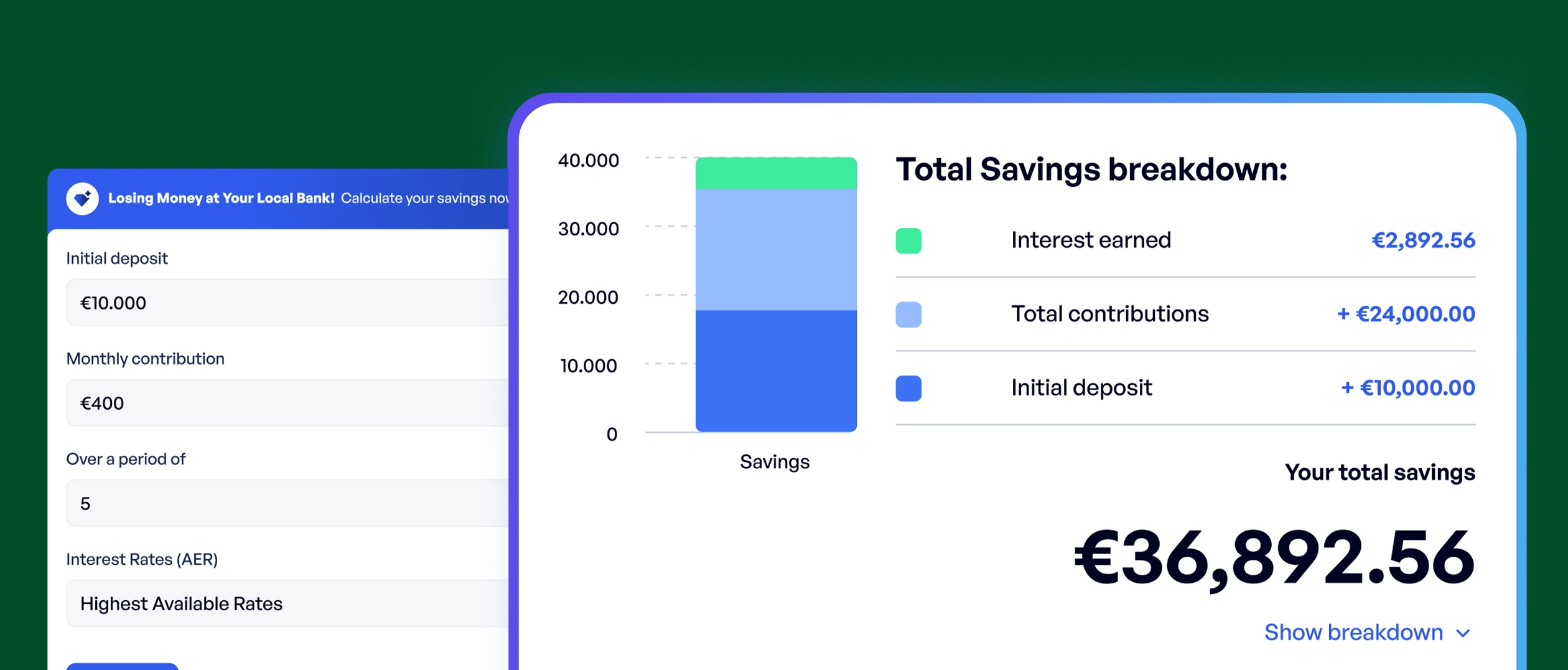
Savings Calculator

Calculate how much you can save over time, and get matched with the best accounts.

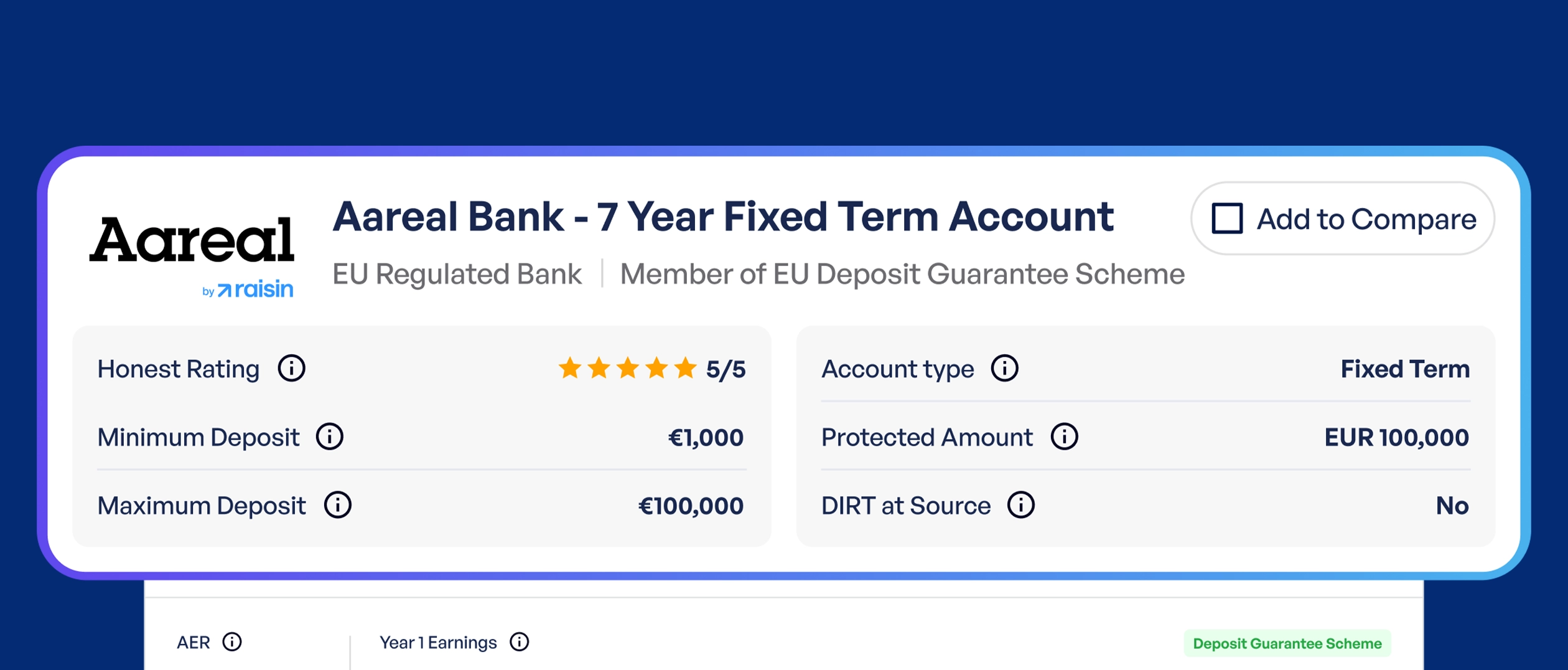
Savings Comparison Tool

Compare over 200 savings account side-by-side for details analysis.